
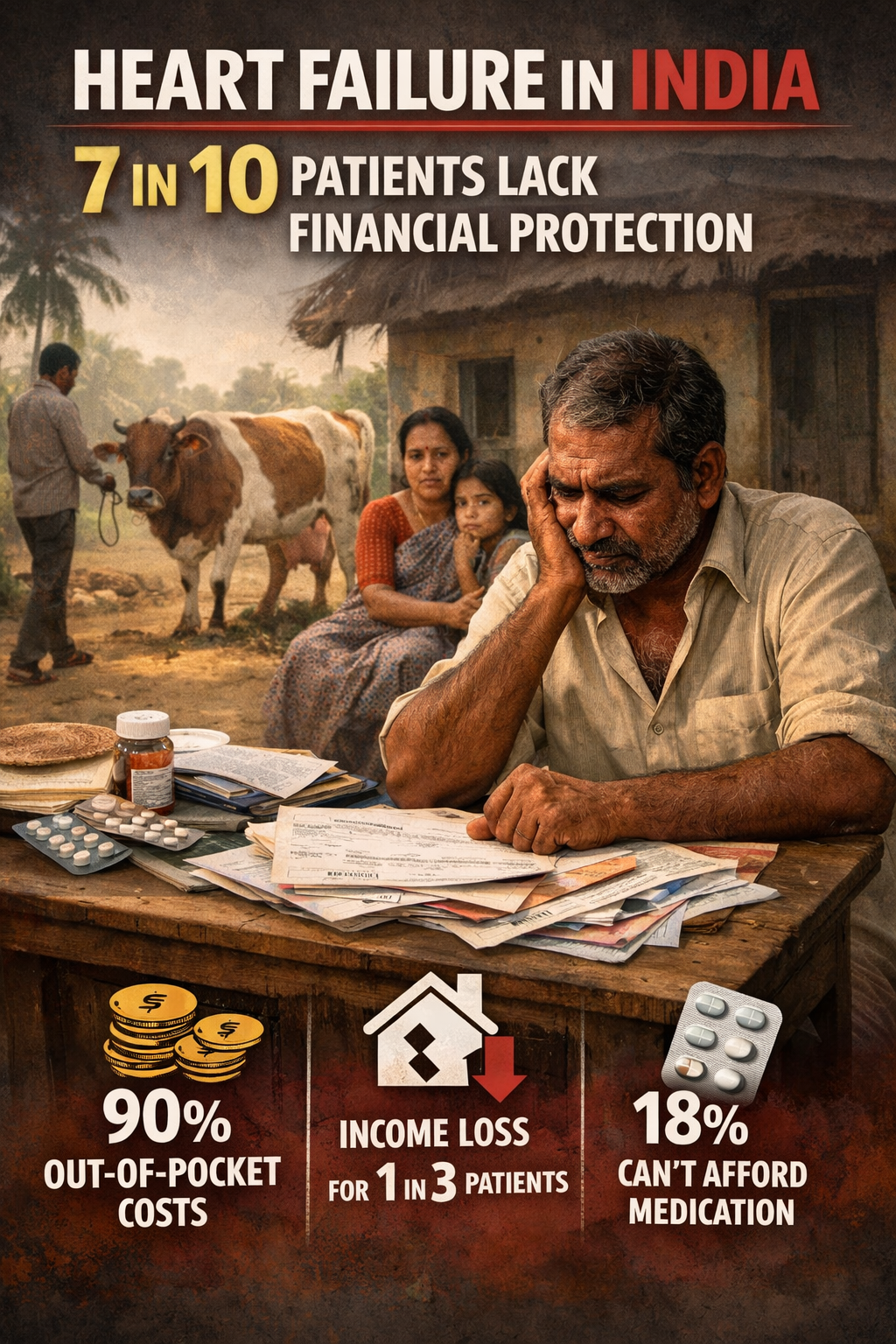

A new multicentre study led by Sree Chitra Tirunal Institute for Medical Sciences and Technology (SCTIMST) has brought attention to the severe financial strain faced by heart failure patients across India. The findings reveal that nearly 70 per cent of patients do not have adequate financial protection, forcing many families to rely heavily on out-of-pocket spending for treatment.
The study, recently published in the Global Heart, shows that out-of-pocket expenses account for more than 90 per cent of the total cost of managing heart failure. This heavy financial burden often leads to difficult choices, including selling assets or compromising on essential treatment.
In a village near Kochi, a 52-year-old farmer named Rajan experienced this reality firsthand. After being hospitalised with chest pain and breathlessness, he was diagnosed with heart failure. The cost of treatment, which reached nearly ₹1.2 lakh, forced him to sell his cow and calf—key sources of income for his household.
The study also highlights the broader economic impact of the disease. About one in three patients reported a decline in their annual income following diagnosis, reflecting how chronic illness can disrupt livelihoods. Additionally, nearly 18 per cent of patients struggled to continue their prescribed medications, raising concerns about long-term disease management and outcomes.
Researchers emphasise that heart failure not only poses a major health challenge but also creates significant financial vulnerability, especially in the absence of widespread insurance coverage. The findings underscore the urgent need for stronger financial protection mechanisms and improved access to affordable care to prevent families from slipping into economic hardship due to medical expenses.