
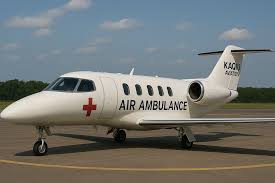

In a significant move to enhance emergency healthcare access, the Government of Odisha has introduced a state-funded airlifting service for critically ill patients requiring immediate advanced medical intervention.
The initiative, titled Emergency Care by Air Lifting, aims to ensure that patients in life-threatening conditions can be rapidly transported to super-specialty hospitals, even outside the state, without financial burden.
A Lifeline for Critical Care
Under the new scheme, the state will fully cover the cost of air ambulance services, removing a major barrier for patients who previously could not afford such high-cost emergency transport. The service is designed to support cases where timely access to tertiary or quaternary care can make the difference between life and death.
Structured Approval Mechanism
To ensure appropriate utilization, each case will undergo evaluation by a designated medical expert committee. The committee will assess the patient’s condition and determine the necessity of airlifting. Final approvals will be managed through the state health administration, ensuring both speed and accountability.
Seamless Emergency Coordination
The process has been designed for efficiency. Patients will first be transported via Advanced Life Support (ALS) ambulances to the nearest airport. From there, air ambulances will transfer them to identified higher centres equipped to handle complex medical cases.
State health authorities will coordinate the entire operation—from medical assessment to logistics—ensuring minimal delay during emergencies.
Addressing Rural Healthcare Gaps
The initiative is particularly impactful for patients in remote and underserved regions, where access to specialized healthcare remains limited. By integrating air evacuation into its emergency response system, Odisha aims to bridge geographical barriers and improve critical care outcomes.
A Step Toward Advanced Emergency Systems
With this move, Odisha joins a growing group of regions exploring air-based emergency medical services as part of public healthcare delivery. The initiative is expected to improve golden-hour response times, reduce preventable deaths, and strengthen the state’s overall emergency care infrastructure.
Editorial Perspective
This development signals a broader shift in India’s healthcare strategy—from expanding physical infrastructure to enabling rapid, technology-driven access to care. If executed effectively, Odisha’s model could serve as a blueprint for other states aiming to modernize emergency medical response systems.