
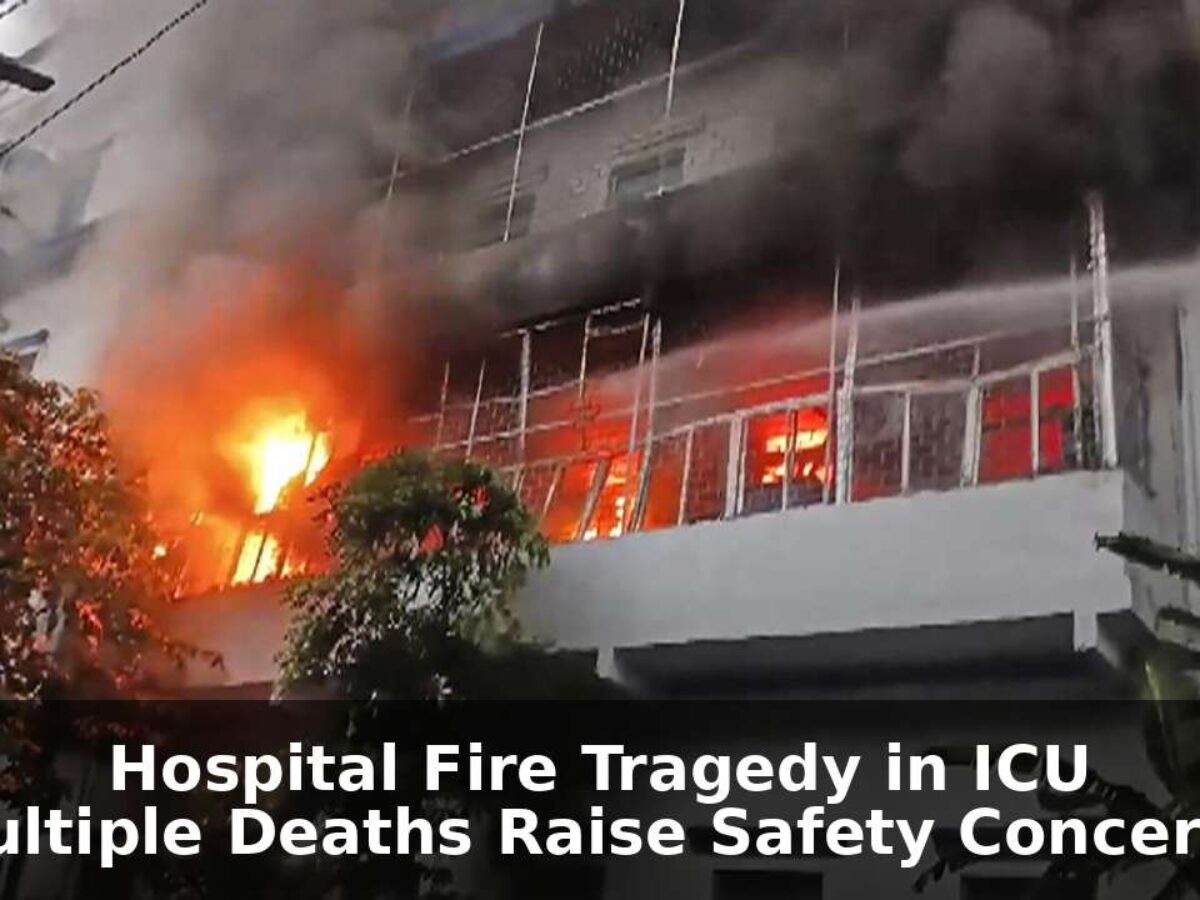

India has witnessed several devastating hospital fire incidents over the years, many of which have resulted in significant loss of life. These tragedies have repeatedly highlighted serious gaps in fire safety preparedness, infrastructure, and emergency response systems within healthcare facilities.
One of the deadliest incidents occurred in December 2011 at AMRI Hospital in Kolkata, where a fire originating in the basement led to the deaths of over 90 people. Most victims succumbed to toxic smoke inhalation, making it one of the worst hospital fire disasters in the country.
In more recent years, the frequency of such incidents has raised growing concern. During the COVID-19 pandemic, hospitals were particularly vulnerable due to overcrowding and increased oxygen usage. In April 2021, a fire at Vijay Vallabh Hospital in Virar, Maharashtra, claimed the lives of multiple COVID-19 patients in the ICU. Similarly, in May 2021, a blaze at a COVID-designated hospital in Bharuch, Gujarat, resulted in the deaths of at least 18 patients and healthcare workers. (Wikipedia)
Another tragic incident took place in March 2021 at Mumbai’s Dreams Mall, which housed a COVID care facility. The fire burned for over 40 hours and led to the deaths of several patients, including those on ventilator support.
More recently, in November 2024, a fire broke out in the neonatal intensive care unit of Maharani Laxmi Bai Medical College in Jhansi, Uttar Pradesh. The tragedy resulted in the deaths of multiple newborns and exposed the risks of overcrowding and inadequate safety measures in critical care units. (Wikipedia)
These incidents are not isolated. Studies indicate that India has seen a sharp rise in hospital fire accidents in recent years, especially post-2020, with dozens of major incidents leading to numerous fatalities and large-scale evacuations. (PMC)
A common pattern across these tragedies includes electrical short circuits, poor maintenance of equipment, lack of functional fire alarms and suppression systems, and delays in evacuation. Intensive Care Units (ICUs), where patients are often immobile and dependent on life-support systems, remain particularly high-risk zones.
Despite the introduction of fire safety regulations and guidelines, repeated violations and lapses continue to be reported. These recurring disasters underline the urgent need for stricter enforcement of safety norms, regular audits, staff training, and improved infrastructure in hospitals across the country.