
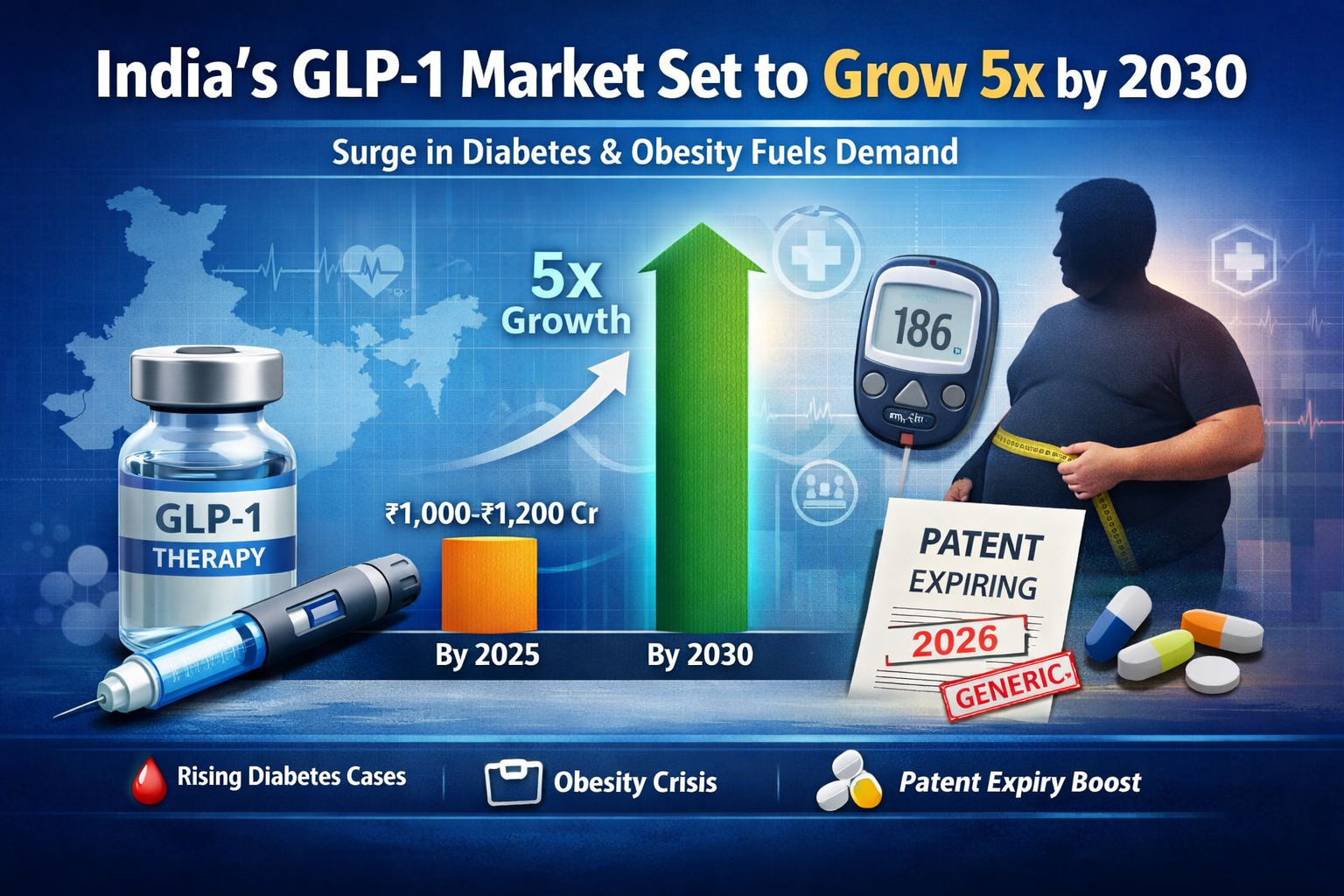

Rising diabetes and obesity rates, along with the upcoming patent expiry of semaglutide, are expected to drive rapid expansion of India’s GLP-1 therapy market.
India’s market for GLP-1 therapies—medications widely used for managing diabetes and increasingly prescribed for weight loss—is projected to grow nearly five times over the next five years, according to a new report by CareEdge Ratings.
The analysis estimates that the Indian GLP-1 drug market will expand from approximately ₹1,000–₹1,200 crore in 2025 to nearly ₹4,500–₹5,000 crore by 2030, driven by the rising prevalence of obesity and type-2 diabetes, increasing awareness of medical weight management, and the expected entry of more affordable generic drugs.
Patent Expiry to Boost Generic Competition
A major catalyst for this growth is the patent expiry of semaglutide in India in March 2026. Semaglutide is the key ingredient in globally popular drugs such as Ozempic and Wegovy, both developed by Novo Nordisk.
Once the patent expires, Indian pharmaceutical manufacturers are expected to introduce generic versions of the drug, potentially reducing prices by 40–50 percent in FY27, followed by an additional 10–30 percent price decline in FY28 as competition intensifies.
Currently, monthly treatment with GLP-1 therapies in India costs between ₹8,500 and ₹16,500, limiting access for many patients.
Global pharmaceutical giants Novo Nordisk and Eli Lilly entered the Indian market in 2025 with diabetes and obesity medications, including Mounjaro, and have partnered with local firms to expand distribution across Tier-2 and Tier-3 cities.
Rising Disease Burden Driving Demand
India’s large and growing patient population presents a significant opportunity for GLP-1 therapies.
According to estimates cited in the CareEdge report:
-
More than 101 million Indians are currently living with type-2 diabetes
-
Obesity and overweight prevalence is rising rapidly across urban and semi-urban populations
Research by the World Obesity Federation suggests that around 8 percent of Indian adults are living with obesity, while the number of adults with high body mass index (BMI) could exceed 400 million by 2030.
GLP-1 therapies mimic a natural hormone that regulates blood sugar and appetite. In addition to improving glycemic control, these drugs:
-
Slow gastric emptying
-
Increase feelings of fullness
-
Reduce calorie intake
Clinical studies also indicate potential benefits in cardiovascular health, kidney protection, and blood pressure control.
Pharmaceutical companies are further exploring the use of GLP-1-based therapies for other conditions, including fatty liver disease, sleep apnea, cardiovascular disorders, and substance-use disorders.
Global GLP-1 Market Surging
The GLP-1 drug category has experienced explosive growth globally. Between 2020 and 2025, sales of these medications increased more than tenfold as demand for obesity and diabetes treatments surged.
The market expanded rapidly following regulatory approvals of drugs such as Ozempic and Wegovy, followed by Eli Lilly’s tirzepatide-based therapy, Mounjaro.
In early 2026, Novo Nordisk introduced an oral formulation of Wegovy, aiming to improve patient convenience and reduce cold-chain logistics challenges associated with injectable versions.
India’s Role as Both Consumer and Manufacturer
India could emerge as a key player in the global GLP-1 supply chain. The country already accounts for around 20 percent of global generic medicine production by volume and has strong pharmaceutical manufacturing infrastructure.
Several domestic companies—including Sun Pharmaceutical Industries, Zydus Lifesciences, Dr. Reddy’s Laboratories, and Torrent Pharmaceuticals—are reportedly preparing semaglutide formulations for launch once patent restrictions expire.
Meanwhile, companies such as Cipla and Emcure Pharmaceuticals have entered partnerships with global innovators for marketing and distribution in India.
Challenges and Regulatory Concerns
Despite strong growth prospects, the GLP-1 market faces several challenges.
Patent litigation and possible extension strategies by innovator companies could delay generic launches. Additionally, manufacturing peptide-based drugs like semaglutide is technically complex and requires sophisticated synthesis and purification processes.
Safety concerns are also being closely monitored, as long-term data for obesity treatment—approved only in 2021—remains limited. Reported side effects include:
-
Gastrointestinal discomfort
-
Pancreatitis
-
Rare thyroid-related complications
Another growing concern is the off-label use of these drugs for cosmetic weight loss, which raises both clinical and regulatory issues.
Market Outlook
CareEdge Ratings expects the first wave of generic GLP-1 launches to begin shortly after the 2026 patent expiry, with most new products entering the market by the second half of FY27.
Although competition may compress margins for generic manufacturers, early entrants are likely to capture significant long-term market share as GLP-1 therapies become a mainstream treatment option for chronic diabetes and obesity management.
Beyond pharmaceuticals, the rapid adoption of these therapies could also influence sectors such as wellness, health insurance, healthcare services, and even food and beverage consumption patterns.