
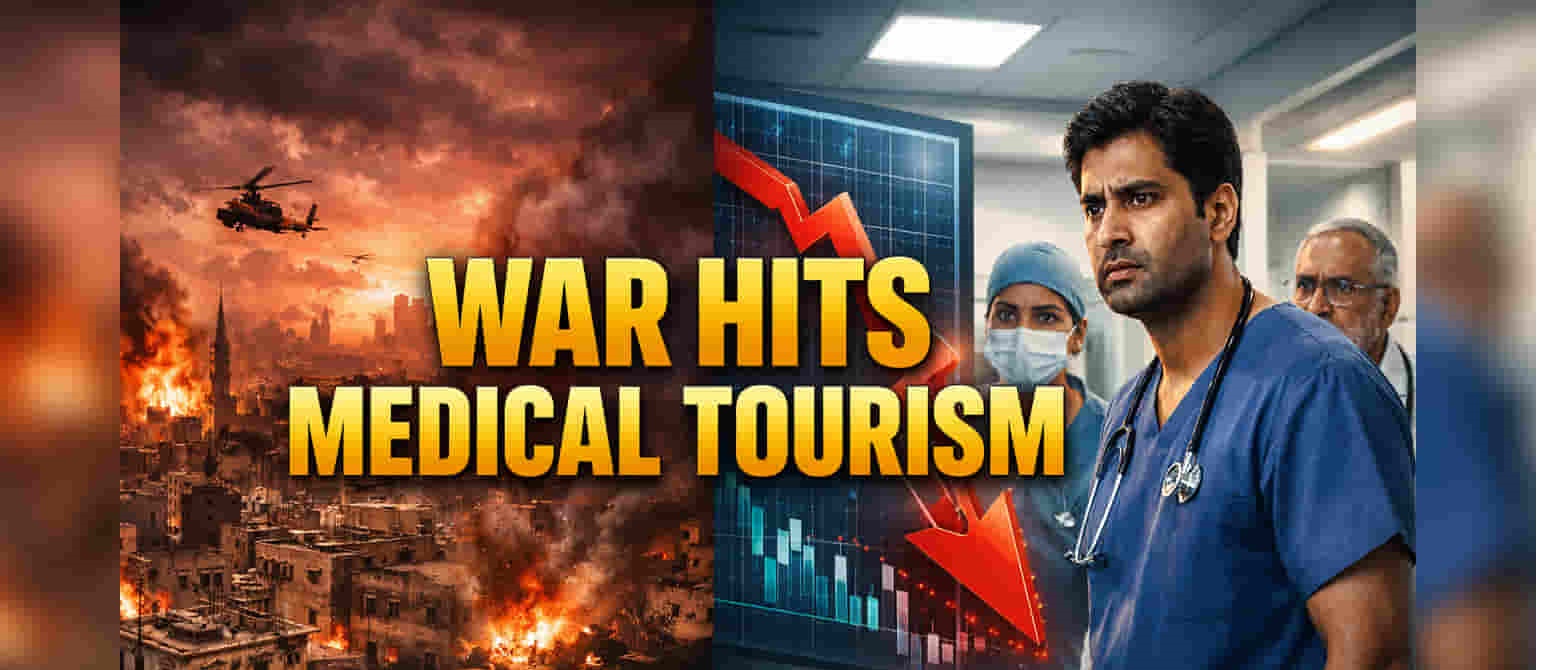

India’s leading hospital chains are witnessing a significant decline in international patient inflows as escalating tensions involving the United States, Israel and Iran disrupt travel across the Middle East, a key source market for medical tourism.
Major healthcare providers such as Fortis Healthcare, Artemis Hospitals and Marengo Asia Hospitals have reported a steep fall—ranging between 50% and 75%—in overseas patient arrivals over the past two weeks. The decline is largely attributed to reduced travel from Middle Eastern countries.
Hospital executives warn that the drop is already impacting revenues and could deepen if the geopolitical situation persists. Fortis Healthcare estimates a potential 15–20% hit to its monthly revenue, with other providers indicating similar financial pressure.
India has long been a preferred destination for patients from countries such as Oman, Saudi Arabia, Iran, Iraq and Yemen, who seek advanced and cost-effective treatment. These markets have been crucial for major hospital networks including Max Healthcare, Apollo Hospitals and Manipal Hospitals.
However, ongoing disruptions—including airspace closures, flight cancellations and surging airfares—have created significant barriers for patients planning treatment in India. Some hospitals report that new patient registrations from the Middle East have nearly dropped to zero in recent days.
Patients from the region typically travel to India for specialised procedures such as organ transplants, cardiac surgeries, neurology treatments, oncology care and urology services. While many of these cases involve critical conditions, hospitals note that elective procedures—including cosmetic surgeries, implants and geriatric care—have been the most affected, as patients defer non-urgent treatments amid uncertainty.
In response, Indian hospitals are now looking to diversify their international patient base by targeting emerging markets in Southeast Asia, Africa and Central Asia.
Industry experts suggest that the coming weeks will be crucial. Historically, medical tourism takes two to three months to recover following major geopolitical disruptions, making the trajectory of the current conflict a key factor in determining how quickly patient inflows can rebound.