
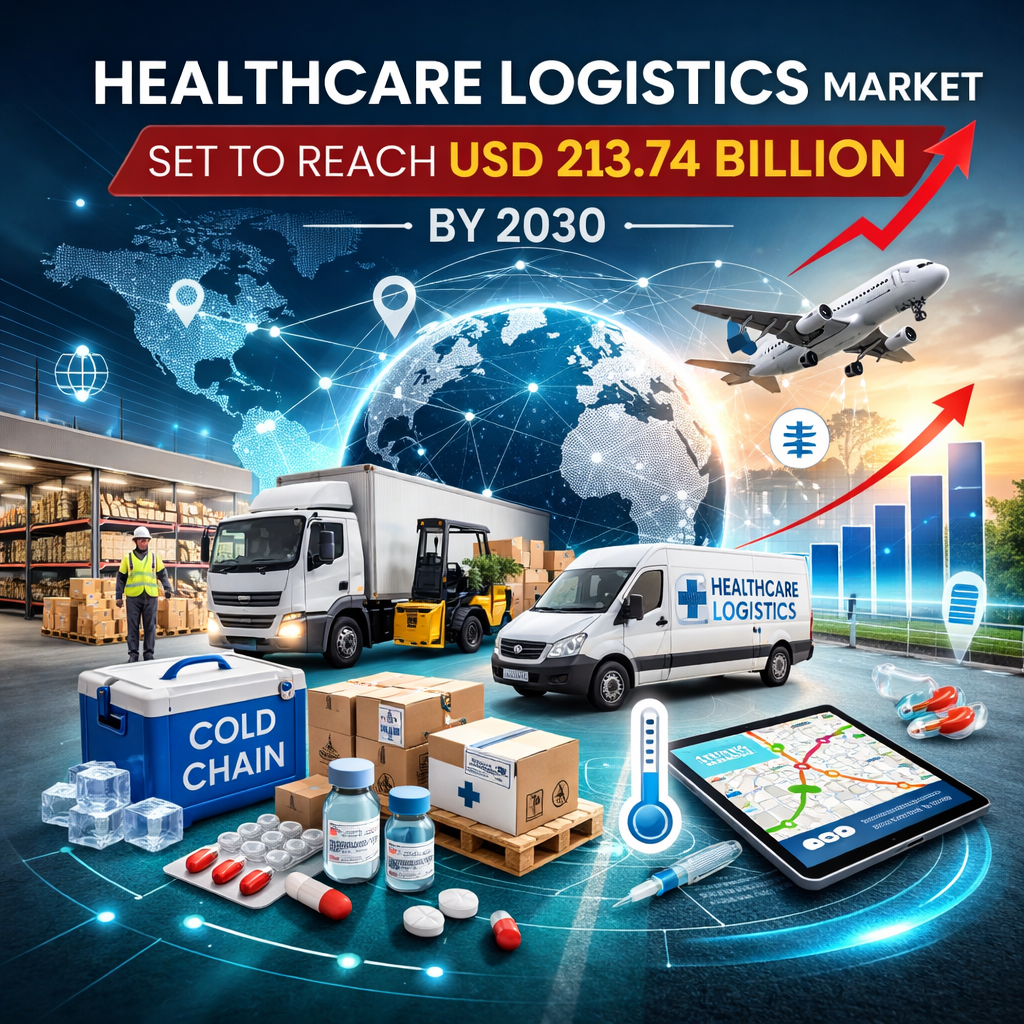

The global healthcare logistics market is poised for significant expansion, with projections indicating it will reach USD 213.74 billion by 2030, growing at a steady compound annual growth rate (CAGR) of around 10 percent. This growth reflects the increasing complexity of healthcare supply chains and the rising demand for efficient, reliable, and technology-driven logistics solutions.
Healthcare logistics plays a critical role in ensuring the safe and timely delivery of pharmaceuticals, medical devices, vaccines, and biologics. As healthcare systems worldwide evolve, logistics is no longer just a support function but a strategic pillar enabling better patient outcomes and operational efficiency.
One of the primary drivers of this growth is the rising demand for biologics, specialty drugs, and vaccines, many of which require strict temperature-controlled environments. This has significantly boosted the need for advanced cold chain logistics infrastructure. From manufacturing facilities to last-mile delivery, maintaining product integrity has become a top priority for healthcare providers and logistics companies alike.
In parallel, the rapid growth of home healthcare services is reshaping the logistics landscape. With more patients opting for at-home treatments, the demand for reliable last-mile delivery systems has surged. This trend is further amplified by an ageing population and the increasing prevalence of chronic diseases, which require continuous medication and monitoring.
Technology is also playing a transformative role in this sector. The integration of digital platforms, real-time tracking systems, and automation is enhancing visibility and efficiency across the supply chain. Companies are investing in smart warehouses, AI-driven inventory management, and data analytics to optimise operations and reduce costs while ensuring compliance with stringent regulatory standards.
Another key trend is the growing emphasis on transparency and traceability. With stricter regulations and the need to prevent counterfeit drugs, stakeholders are adopting advanced tracking solutions to monitor products at every stage of the supply chain. This not only improves safety but also builds trust among patients and healthcare providers.
The market is highly competitive, with major global players such as DHL, FedEx, UPS Healthcare, DB Schenker, and Kuehne+Nagel leading the charge. These companies are continuously expanding their healthcare logistics capabilities, particularly in cold chain solutions and integrated supply chain services, to meet the evolving needs of the industry.
In conclusion, the healthcare logistics market is entering a phase of rapid transformation and growth. As healthcare delivery becomes more complex and patient-centric, the importance of efficient, technology-enabled logistics systems will only continue to rise. Companies that invest in innovation, infrastructure, and compliance will be well-positioned to capitalise on the opportunities in this dynamic and essential sector.