

Summary
China has officially approved the world’s first commercial brain-computer interface (BCI) system designed to help paralyzed patients. This new medical device is built to restore hand movement in people who have lost the ability to use their limbs. Developed by a company in Shanghai, the system marks a major milestone in medical technology by moving brain-controlled devices from the research lab to the open market. This approval is a significant step in using advanced technology to improve the daily lives of people with severe physical disabilities.
Main Impact
The approval of this system changes the way doctors can treat permanent paralysis. For years, brain-computer interfaces were mostly used in experimental studies and university trials. By granting commercial clearance, the Chinese government has allowed this technology to become a real product that hospitals and patients can buy. This development specifically targets quadriplegia, a condition where a person cannot move their arms or legs. By giving these patients a way to control a robotic glove with their thoughts, the technology offers a new level of independence that was previously impossible.
Key Details
What Happened
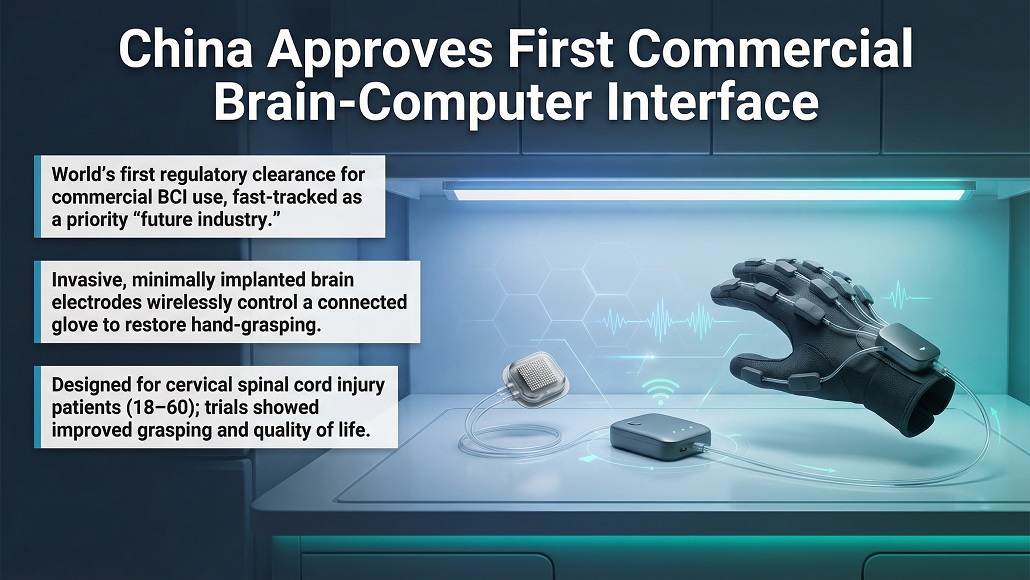
The National Medical Products Administration in China gave the green light to a system created by Borui Kang Medical Technology. The device works by connecting the human brain directly to an external machine. It uses a special glove that the patient wears on their hand. When the patient thinks about moving, the brain sends signals to the interface, which then tells the glove to move. This allows the patient to perform basic tasks like grasping and holding objects. The system is considered "invasive" because it requires a surgical procedure, but it uses a modern approach that is less risky than older methods.
Important Numbers and Facts
The regulator has set specific rules for who can use this device. Patients must be between the ages of 18 and 60. They must have a diagnosis of a cervical spinal cord injury that has lasted for at least one year. Additionally, their medical condition must have been stable for at least six months following their initial treatment. The system is designed for those who have some upper-arm function but have completely lost the ability to use their hands. The technology itself uses wireless communication, meaning the patient does not need to be physically tied to a computer by heavy cables. The electrodes are placed on the outer layer of the brain's covering, which helps reduce the complexity of the surgery.
Background and Context
A brain-computer interface acts as a bridge. In a healthy body, the brain sends messages through the spinal cord to the muscles. When the spinal cord is badly injured, those messages cannot get through. A BCI device picks up those brain signals and sends them through a computer instead, skipping the injured part of the body. China has identified this field as a major priority for its national growth. In a recent government plan, BCI technology was listed as a "future industry." This means the country is putting more resources into neurotechnology to stay ahead in the global medical market.
Public or Industry Reaction
The medical and tech industries have watched this development closely. The Chinese drug regulator gave this project priority status, which helped it move through the legal process faster than usual. During clinical trials, the data showed that patients who used the system saw a real improvement in their ability to grip things. This led to a better quality of life, as patients could perform simple daily tasks on their own. Experts suggest that this commercial approval will encourage other companies to speed up their own research into similar brain-controlled tools.
What This Means Going Forward
This is likely just the beginning for commercial BCI products. Now that the first device has been approved, it sets a clear path for future inventions. We may soon see devices that help people walk again or systems that allow people who cannot speak to communicate through a computer screen. The move toward wireless and minimally invasive technology makes these systems much more practical for use at home rather than just in a hospital. As the technology becomes more common, the cost may eventually go down, making it available to more people around the world.
Final Take
The commercial launch of a brain-computer interface is a historic moment for medicine. It shows that the goal of connecting the human mind to machines is no longer just a dream from a science fiction movie. For people living with paralysis, this technology represents a new form of hope and a chance to regain control over their own bodies. It marks the start of a new era where technology and biology work together to solve some of the most difficult medical challenges.
Frequently Asked Questions
How does the BCI system help paralyzed patients?
The system reads brain signals and sends them to a robotic glove. This allows patients who cannot move their hands to grasp and release objects just by thinking about the action.
Is the surgery to install the device dangerous?
The device is considered invasive because it requires surgery, but it uses a "minimally invasive" method. The electrodes are placed on the outside of the brain's protective layer rather than deep inside the brain tissue.
Who is eligible to use this new technology?
The device is approved for adults between 18 and 60 years old who have had a stable spinal cord injury for at least one year and have lost the use of their hands.